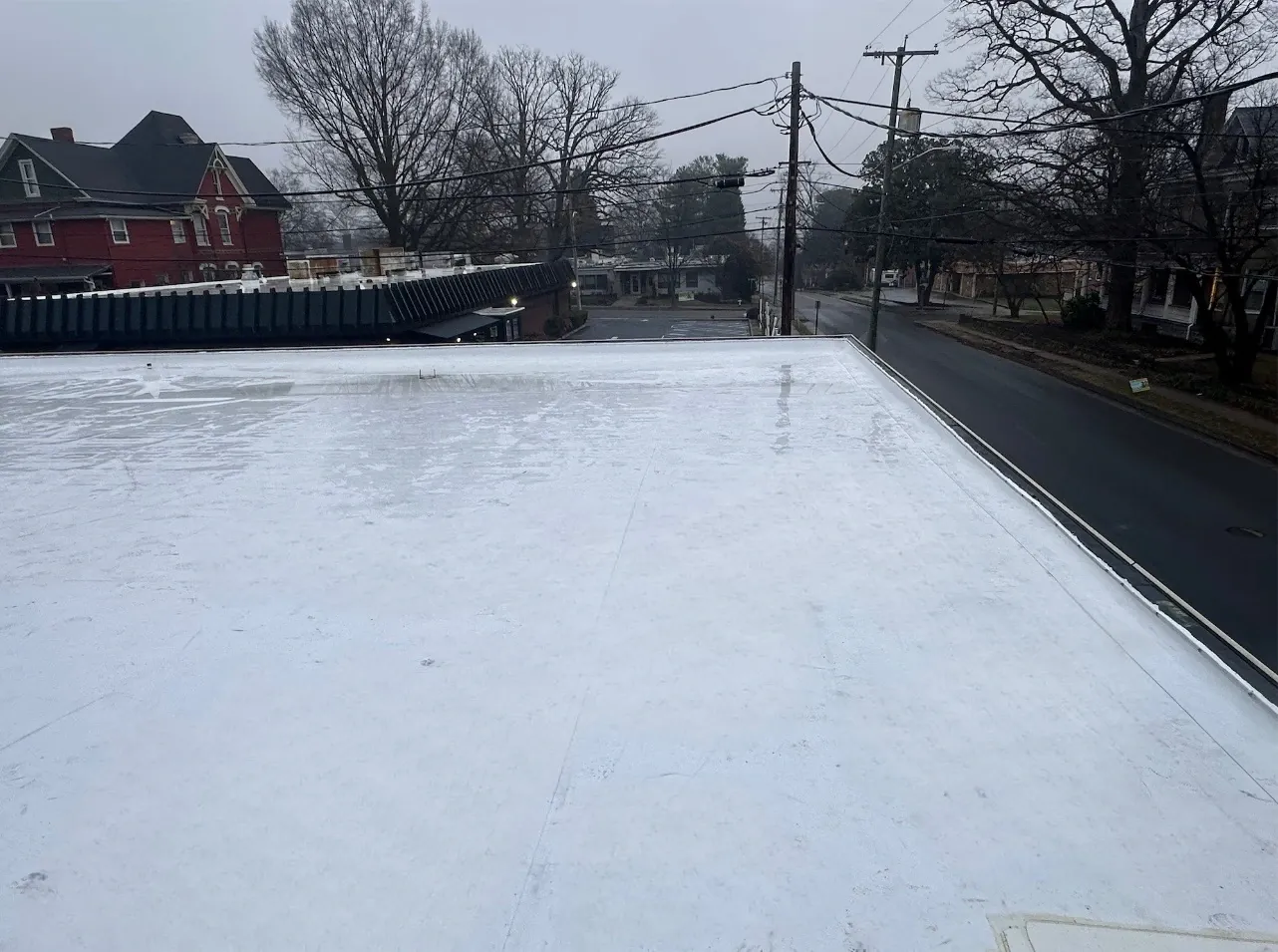
Most commercial roofs in Spartanburg get ignored until water is already coming through a ceiling tile. That is the expensive way to find out something was wrong. Flat and low-slope roofs don't announce their problems the way a steep shingle roof does. A seam lifts, a drain clogs, a little water sits where it shouldn't, and none of it shows from the parking lot. An inspection is how you get ahead of all that. We climb your roof, walk every plane, and photograph the real condition of the membrane, seams, flashing, drains and rooftop units. Then we hand you a plain-English report that tells you what is fine, what needs watching, and what needs fixing now. No scare tactics, no roof you don't need. Just a straight read on the building you are responsible for.
When your building needs a roof inspection
You don't need a leak to justify getting up there. For a commercial building, a roof inspection earns its keep in a handful of situations.
- You just bought the building, or you're about to, and you want to know what you're taking on
- It has been a couple of years and nobody has actually looked at the roof
- A storm rolled through and you want it documented before you file anything
- Your lease, lender or insurer wants a condition report on file
- The roof is getting close to the end of its warranty and you want to protect the coverage
- You're seeing stains inside, higher energy bills, or ponding that won't drain
If any of those fit, a look now costs a lot less than the repair you'll be staring at if you wait.
What a commercial roof inspection covers
We inspect the whole roof, not just the spot over the latest stain. Every inspection walks the same ground so nothing gets skipped: the field of the membrane for blisters, splits and shrinkage; every seam and lap where two sheets were joined; the flashing around curbs, walls and parapets; the boots and collars on every penetration; the drains, scuppers and gutters that are supposed to move water off the roof; and the rooftop units, where foot traffic and loose panels cause more leaks than people expect. We also note ponding, failed sealant, and any spot where the deck below feels soft underfoot. You get photos of all of it, not just a verbal 'looks rough up there.'

Commercial systems we inspect
What we look for changes with what is already on your building, and Spartanburg has all of it. We inspect TPO and EPDM single-ply, modified bitumen, the older built-up gravel roofs, and metal, whether that is standing-seam or exposed-fastener. Each one fails in its own way, so each one gets read differently. If your building runs a true flat roof and you already know it is leaking, our flat roof repair page gets into the membrane and seam work itself. If the inspection turns up a roof that is past saving, our commercial roofing page covers full replacement and new systems. This page is about the step before either one: finding out, on paper and in photos, exactly where your roof stands.
What we find most often up there
Commercial roofs tend to fail at the same predictable weak spots, and an inspection is built to catch them early. Ponding is the usual headache, water that can't drain just sits in a low spot and slowly works on everything beneath it. Seams come next, since that is where the membrane was joined and where age pulls it back apart. Flashing around HVAC curbs, vents and drains is a quiet troublemaker, and a surprising share of commercial leaks actually start right there rather than out in the open field. Add the odd puncture from foot traffic or a dropped tool and that covers most of what we write up. The reason to catch it during an inspection is simple math. A lifting seam flagged early is a short, cheap visit. That same seam left alone soaks the insulation and turns into wet decking you have to tear out.

Your inspection report, and what you do with it
The point of the whole thing is the report, and ours is built to be useful, not to sit in a drawer. You get photos of every finding tied to where it is on the roof, a plain note on whether each item is fine, worth watching, or needs attention now, and an honest recommendation on timing. If the roof has years of life left, we say so in writing. That report does real work for you: it backs up a budget request to ownership, it gives a property manager a paper trail, it supports a warranty claim, and if the damage is storm-related it feeds straight into the documentation an adjuster wants. It is yours to keep either way.
What a commercial inspection costs
There is no honest flat number before we see the roof, because size, height, system and access all move it. What we can tell you is how we price it, so there are no surprises.
| Type of inspection | What it covers | What to expect |
|---|---|---|
| Quick condition check | A walk of an accessible roof, photos of the trouble spots | Often free when it leads to a scoped repair |
| Full documented inspection | Every plane photographed, written report, timing recommendations | A flat fee based on roof size and access |
| Due-diligence report | Formal condition report for a purchase, lender or insurer | Quoted up front before we schedule |
Either way you know the price before we start, and if the inspection turns into a repair you get a written estimate before anybody touches the roof.
Repair, replace, or just keep an eye on it
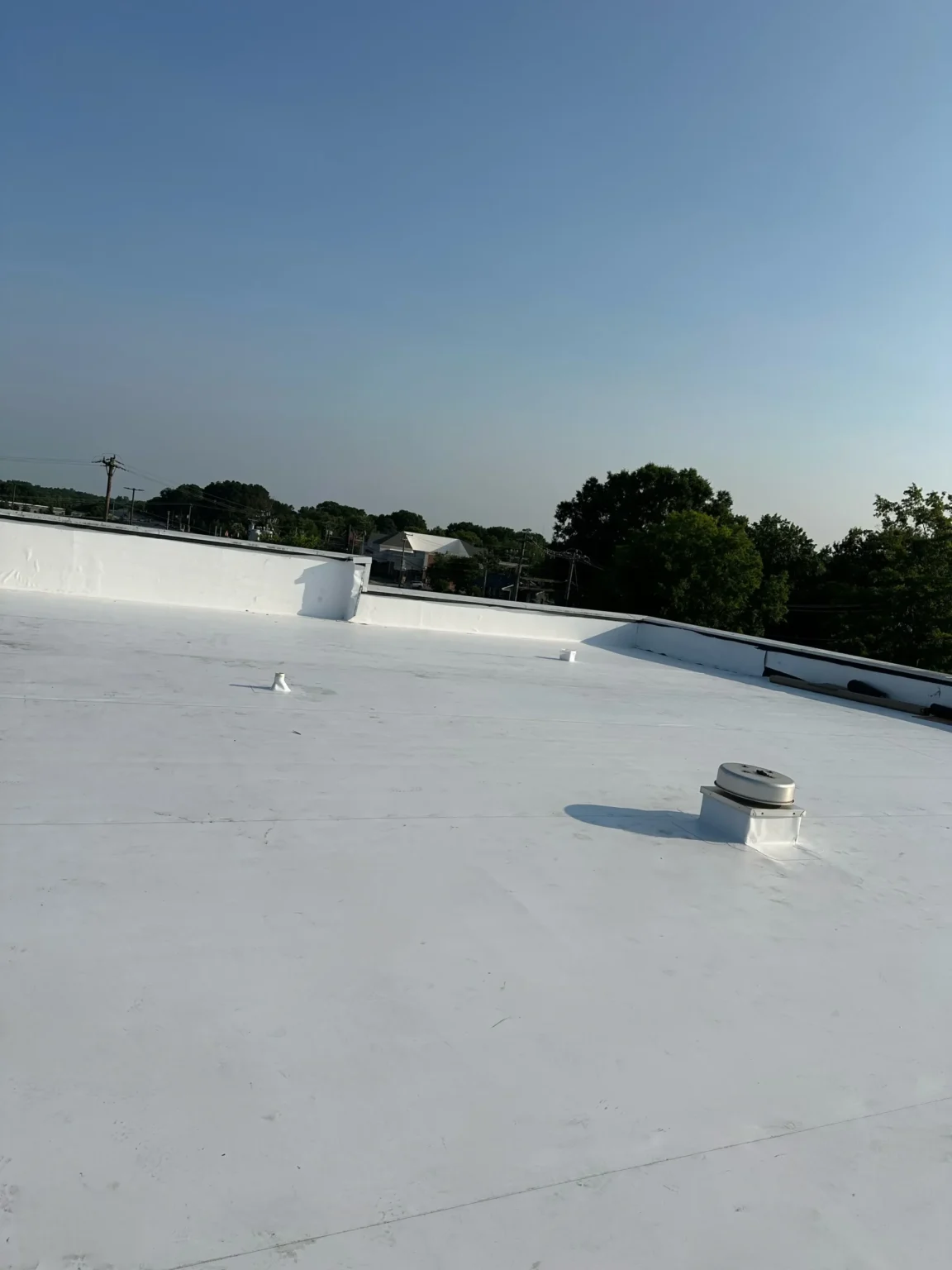
An inspection without a clear next step is just a stack of photos. Once we have walked your roof, we tell you which bucket it falls in. If the damage is contained and the membrane has life left, that is a targeted fix, and our commercial roof repair in Spartanburg crew handles exactly that. If we would just be patching the same tired roof every few months, we show you the photos and the math instead of nickel-and-diming you. And if a storm caused it, we document the damage for your insurance claim and run storm damage repair so you are not fighting the water and the paperwork at the same time. Most roofs, though, just need a plan and a date on the calendar.
Serving Spartanburg and the Upstate
We inspect commercial and flat roofs across Spartanburg and the towns around it, Boiling Springs, Duncan, Lyman, Reidville, Taylors, Greer, and out toward Five Forks. Not sure your building is in range? Call us at (864) 398-1805 and we'll tell you straight. We're licensed and insured in South Carolina, we install GAF and Owens Corning systems, and James Green has had the company's name on every job since day one. If an inspection turns up work that needs doing, Hearth financing is there to spread the cost out.