Every South Carolina homeowner needs a roof maintenance checklist South Carolina seasons actually demand. A generic national guide is not much use when it ignores salt air on the coast or freeze-thaw cycles in the Upstate. This article covers what to inspect each spring and fall, how coastal homes near Charleston and Myrtle Beach differ from homes around Greenville and Spartanburg, and when a job belongs to a licensed roofer rather than a weekend ladder climb.
Skipping seasonal roof checks is how small problems turn into big repair bills. A roof maintenance checklist South Carolina homeowners follow twice a year keeps repair costs manageable and a full replacement further down the road. Most roofing problems that end in a full tear-off started as something a seasonal inspection would have caught years earlier.
Table of Contents

Why South Carolina Roofs Need Region-Specific Care
South Carolina is not one climate. The coast and the Upstate put entirely different stress on a roof, and any roof maintenance checklist South Carolina roofers recommend reflects that difference. What causes a coastal roof to fail in fifteen years is not the same thing causing an Upstate roof to leak after a hard winter.
Coastal SC: Salt Air, Humidity, and Storm Exposure
Along the coast near Charleston, Myrtle Beach, and Hilton Head, salt-laden air corrodes metal flashings, fasteners, and gutter components faster than anywhere else in the state. Shingles absorb more UV radiation and humidity, which dries out the asphalt layer and causes premature cracking. After storm season, lifted tab shingles, granule-filled gutters, and separated flashing seams are common finds.
According to FEMA’s guidance on roof systems, roof performance under wind and moisture load depends heavily on maintaining sealed flashings and intact roofing materials. On the coast, that means checking metal components every single season without exception. Leaving corroded flashing in place through another hurricane season is asking for a leak.
Upstate SC: Tree Debris, Algae, and Occasional Freezes
Spartanburg, Greenville, and the surrounding Upstate towns deal with heavy tree canopy that holds moisture against the roof and clogs gutters quickly. Moss and algae growth are common on north-facing slopes. Hard freezes happen a few times each winter, and when water sits under a shingle and freezes, it expands. That is how ice damming starts and how hidden leak paths form long before spring arrives.
A proper roof maintenance checklist South Carolina Upstate homeowners follow pays close attention to biological growth and any spots where debris collects against the roof surface. A pile of wet leaves sitting against a fascia board for three months is more damaging than most homeowners realize until the rot shows up.
Spring Roof Maintenance Checklist for South Carolina Homes
Spring is about damage assessment after winter and preparation for summer storm season. For coastal homes, this is the most important inspection of the year. Get out in March or early April before temperatures climb and before the first significant spring storm rolls through.
Work through these items every spring:
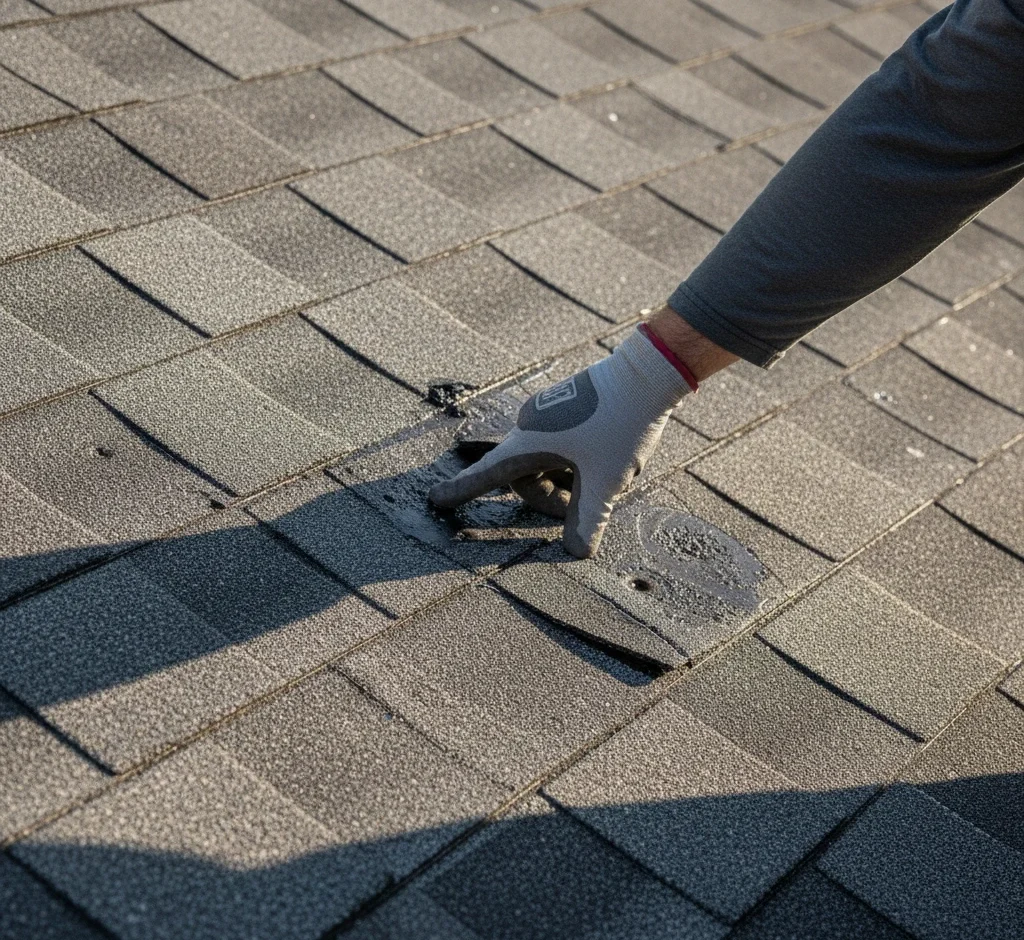
- Look for missing, cracked, or curling shingles along ridges, valleys, and edges
- Inspect all pipe boots, chimney flashings, and skylight frames for cracking or separation
- Check gutters for heavy granule buildup. A gutter full of granules means the shingles are aging out
- Examine soffit and fascia boards for rot or moisture staining
- Inspect attic ventilation. Blocked soffits trap heat that shortens shingle life significantly
- Check for tree limbs in contact with the roof surface. Constant friction wears through granules over time
- Coastal homes: look for rust or white salt oxidation on any exposed metal components
Start from the ground with a pair of binoculars. You can spot most shingle problems, lifted edges, and flashing separation without setting foot on a ladder. Walk the full perimeter of the house and look at all four roof faces before you draw any conclusions.
If you spot corrosion on flashings or any shingles that are clearly missing, that is not a DIY fix. A professional roof inspection in Spartanburg will catch what a ground-level check misses and tell you exactly what needs attention before summer storm season opens anything up further.
Fall Roof Maintenance Checklist for South Carolina Homes
Fall maintenance closes out storm season damage and sets the roof up for winter. This is where the roof maintenance checklist South Carolina homeowners used in spring gets a second pass with fresh eyes. Aim to get this done in October before the first cold snap, while the weather is still cooperative and contractors have availability before the winter rush.
| Task | Coastal SC Focus | Upstate SC Focus |
|---|---|---|
| Gutter cleaning | Clear salt residue and wind debris | Remove heavy leaf and branch buildup |
| Shingle inspection | Check for storm-lifted or cracked tabs | Look for algae, moss, and edge curling |
| Flashing check | Re-seal corroding coastal joints | Inspect chimney and valley flashings |
| Attic check | Verify ventilation stays clear | Look for early moisture or condensation |
| Surface debris | Remove wind-driven material | Clear branch contact points |
Pay particular attention to the valleys. Valleys channel all the water from two roof faces into one narrow strip, and they take more wear than any other part of the roof. If the valley flashing looks thin, pitted, or cracked, that is a repair worth making before winter rain sits on it for weeks at a time.
IBHS research on resilient construction standards consistently shows that roofs on a regular cleaning and inspection schedule perform better in high-wind events. That is a direct benefit for South Carolina homeowners in both hurricane zones and Upstate storm corridors.
If shingles are thinning, granules are heavily depleted, or the edges are starting to roll, repairs may no longer make financial sense. That is a good time to talk through roof replacement in Spartanburg SC before a winter storm forces the conversation.
DIY Tasks vs. When to Call a Roofer
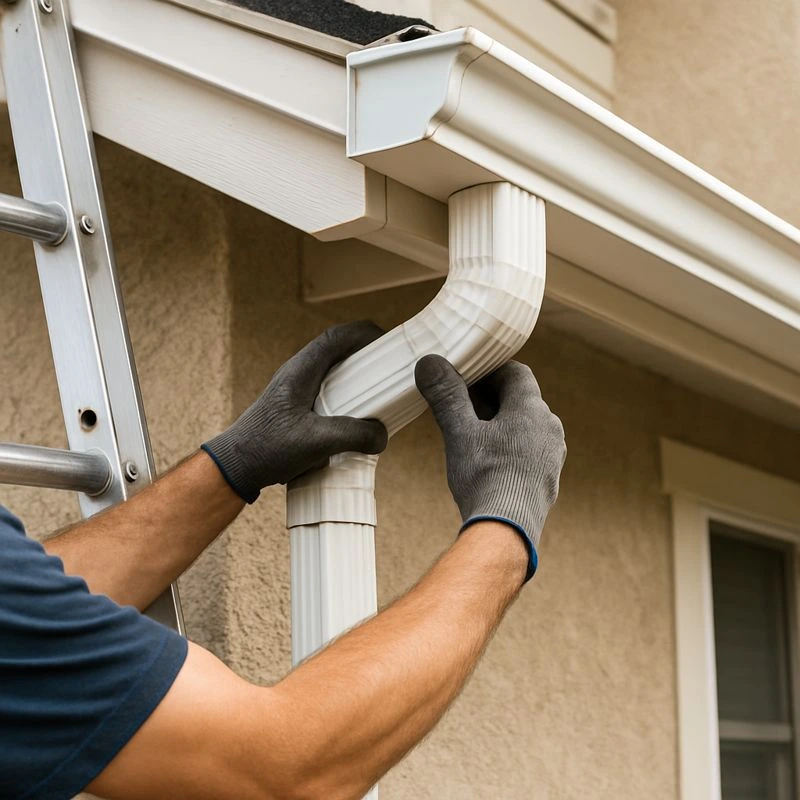
A roof maintenance checklist South Carolina homeowners can safely work through includes ground-level visual checks, gutter cleaning from a stable ladder, attic inspections, and trimming back branches. Those tasks are reasonable for most people and cost nothing but a couple of hours.
Everything else belongs to a licensed contractor. Walking on a pitched roof, replacing or re-sealing flashings, repairing lifted or missing shingles, and any work near a chimney all carry real injury risk. Roof falls are one of the most common serious home improvement injuries each year. If the slope feels steep or the surface feels soft underfoot, stay off it. No repair is worth a fall from fifteen feet.
NAHB’s routine home maintenance guidelines back twice-yearly inspections and recommend licensed contractors for any elevated work.
If you see water staining on interior ceilings after rain, do not put it off. Roof leak repair in Spartanburg SC addressed early costs a fraction of what a delayed fix turns into once the decking gets involved. Once water reaches the decking, the repair scope and the bill both grow fast.
Frequently Asked Questions
How often should I use a roof maintenance checklist in South Carolina?
Twice a year, spring and fall. Coastal homeowners should also do a quick check after any named storm. Following a roof maintenance checklist South Carolina homeowners stick to consistently is the most practical way to catch problems early.
What does a spring roof inspection cover in coastal SC?
Salt corrosion on metal components, lifted or cracked shingles, granule loss in gutters, and flashing separation. Any roof maintenance checklist South Carolina coastal homeowners use should put metal component checks at the top of the list every season.
When is algae growth a real problem on Upstate SC roofs?
When you see dark streaking or greenish patches on the shingle surface, algae or moss is holding moisture against the material and breaking down the granule layer. Upstate SC roof cleaning every two to three years makes a real difference in shingle lifespan.
Can I do my own fall roof maintenance in South Carolina?
Ground-level visual checks, gutter cleaning, and attic checks are safe for most homeowners. Anything on the roof surface itself should go to a licensed roofer. South Carolina's steep residential pitches and older asphalt shingles can be slippery and fragile underfoot.
How do I know when repair stops making sense and replacement is the right call?
Widespread curling, heavy granule loss, and moisture in the decking are all signs the roof has aged past the point where repairs are worth the cost. A licensed roofer will give you a straight answer. This roof maintenance checklist South Carolina guide is a starting point, but a professional inspection confirms whether repair or replacement is the smarter move.