
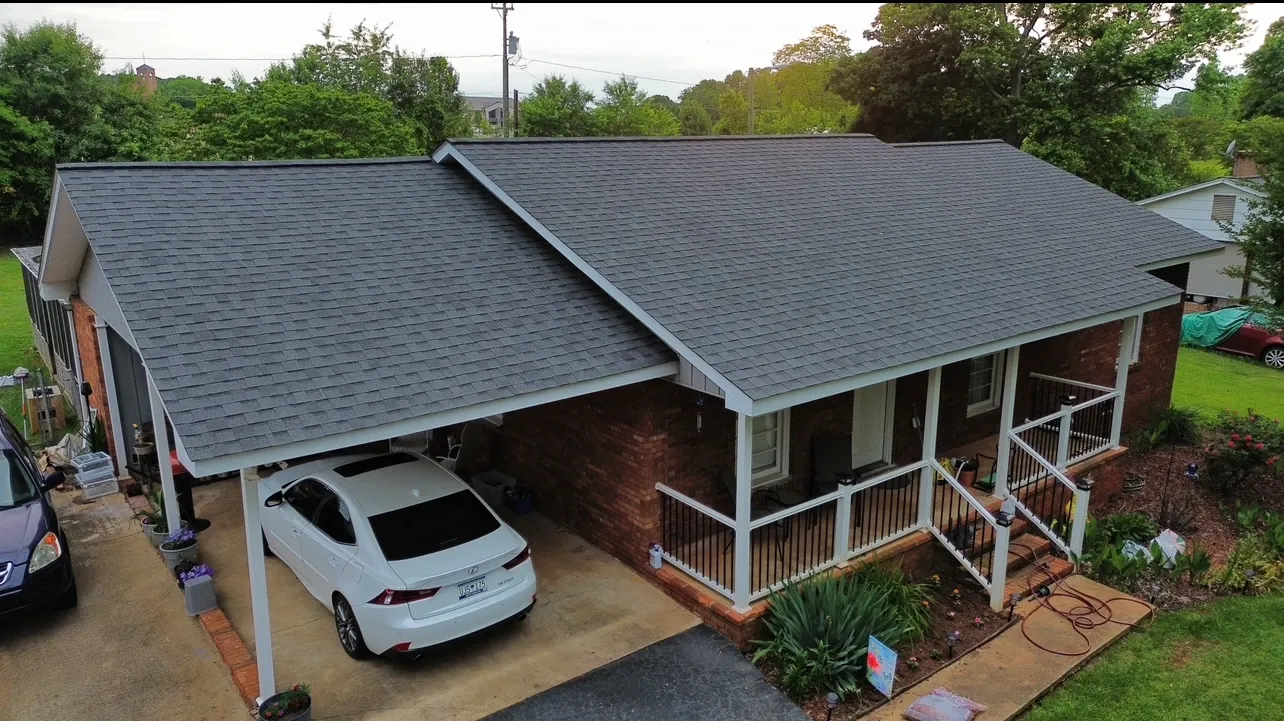
If you’ve been asking yourself how long does a roof last in South Carolina, you’re not alone. This article covers realistic roof lifespans across Charleston, Columbia, and Greenville, explains how SC’s humid and storm-prone climate accelerates wear, and helps you figure out whether you need repairs or a full replacement.

South Carolina’s coastal storms, intense summer heat, and year-round humidity make it one of the harshest environments a roofing system can face. Understanding how long does a roof last here versus what manufacturers promise can be the difference between a smart investment and a costly mistake.

Table of Contents

South Carolina home roof with visible wear highlighting how long does a roof last in local conditions

How Long Does a Roof Last in South Carolina Compared to Manufacturer Ratings?

Most asphalt shingles carry a 20 to 30-year rating. That figure is based on controlled conditions that have little to do with South Carolina’s real climate. In practice, how long does a roof last in South Carolina depends heavily on the material, the city, and how many storm seasons it has survived.

Across the state, real-world performance typically runs 5 to 10 years below manufacturer projections. The Palmetto State sits in a high-humidity corridor with summer temperatures regularly pushing past 95 degrees. That heat cycles through shingles every day, driving expansion and contraction that gradually breaks down the adhesive strips and granule coating.

Insurance Institute for Business & Home Safety research shows that wind uplift and moisture intrusion significantly reduce the real-world lifespan of asphalt shingles. A product rated for 30 years in a dry climate may deliver 18 to 22 years in Columbia or Greenville.

In Charleston, salt air from the Atlantic adds a layer of chemical degradation that most shingle manufacturers never factor into their ratings. If you’re asking how long does a roof last in Charleston SC specifically, the honest answer is typically 15 to 20 years for standard architectural shingles.

How Hurricanes and Storms Affect How Long a Roof Lasts in SC

South Carolina homeowners in coastal and inland areas both deal with storm exposure year after year. According to National Hurricane Center data, South Carolina’s coastline regularly experiences tropical systems that bring high winds and prolonged rainfall. Even storms that don’t make landfall push damaging wind gusts and rain bands well into Columbia and Greenville.

The problem is that storm damage rarely shows up immediately. A moderate storm can slightly lift shingles, crack flashing seals, or strip granules across large sections of the roof without leaving any obvious signs from the ground. Weeks later, moisture starts working its way through the underlayment.

Even minor storms can cause hidden storm damage to your roof, which compounds over time and shortens the roof’s overall lifespan. After any significant weather event, a professional inspection is worth far more than guessing from the driveway.

Average Roof Life by Material in SC's Climate

Roofing MaterialManufacturer RatingRealistic SC Lifespan
3-Tab Asphalt Shingles20–25 years13–18 years
Architectural Shingles25–30 years18–22 years
Metal Roofing40–70 years35–55 years
Tile Roofing50+ years40–50 years
Flat/Modified Bitumen10–20 years8–14 years

Metal roofing consistently outperforms asphalt in South Carolina’s conditions, which is why it’s becoming more common on coastal homes and high-value renovations throughout the Charleston area.

Repair vs. Replace: How to Decide

How long does a roof last in South Carolina also depends on how well it’s been maintained. Not every problem means replacement. When damage is limited to a small area and shingles are under 15 years old, professional roof repairs may extend the life of your roof without requiring a full replacement.

The situation changes when you’re dealing with any of the following:

Weathered roofing materials on a SC home representing how long does a roof last in South Carolina's climate

At that stage, repairs become a drain. Each patch buys a few months without solving the core problem.

When Replacement Makes More Financial Sense

There is a point where patching stops being practical. When recurring leaks, widespread granule loss, or structural soft spots appear, investing in roof replacement services is often more cost-effective than continuing temporary repairs.

For landlords in Columbia and Greenville, this math matters even more. Repeated repair bills combined with tenant issues from water damage add up fast. A full replacement with quality architectural shingles resets the clock and gives you a predictable timeline. When weighing how long does a roof last after replacement versus how long does a roof last with continued patchwork, replacement wins on value almost every time.

Charleston homeowners near the coast should also see replacement as an upgrade opportunity. Swapping standard shingles for high-wind-rated architectural shingles or metal panels offers measurably better performance through future storm seasons.

Planning Ahead in Storm-Prone Areas

South Carolina homeowners benefit from thinking about roof health before a problem forces their hand. Homeowners are encouraged to review Ready.gov storm preparedness resources to understand how repeated severe weather events impact structural systems, including roofing.

Getting an inspection every two years once the roof passes the 12-year mark gives you accurate information about where things stand. That puts you in control of timing rather than reacting to an emergency.

A South Carolina roofing contractor repairing a weathered roof, showing what happens when homeowners wait too long asking how long does a roof last in South Carolina

Frequently Asked Questions

How long does a roof last in South Carolina on average?

How long does a roof last in South Carolina depends on the material and location. Architectural shingles typically last 18 to 22 years, while metal roofing can reach 35 to 55 years. Coastal areas like Charleston see shorter lifespans due to salt air and storm exposure.

Does humidity affect how long does a roof last in SC?

Yes, significantly. South Carolina's humidity accelerates granule loss, promotes algae growth, and breaks down shingle adhesives faster than drier climates. This is why real-world performance regularly falls short of manufacturer ratings.

When should a Greenville or Columbia homeowner replace instead of repair?

If the roof is over 15 years old, has had multiple leaks in the same area, or shows widespread surface wear, replacement is usually the smarter financial move. Repairs on a declining system add up without solving the underlying problem.

How do storms affect how long does a roof last in Charleston SC?

Each storm can cause cumulative hidden damage including lifted shingles, cracked flashings, and granule loss. Over time, this compounds and significantly shortens the roof's lifespan, which is why post-storm inspections matter.

What material lasts longest given how long does a roof last in South Carolina's climate?

Metal roofing. It handles UV exposure, humidity, and wind uplift far better than asphalt shingles and typically delivers 35 to 55 years in South Carolina conditions.

Leave a Reply

Your email address will not be published. Required fields are marked *