If your business needs commercial flat roof repair in South Carolina, this guide is for you. We cover what causes leaks on flat roofs across Charleston, Columbia, and Greenville, how TPO, EPDM, and coated metal systems hold up in SC’s climate, and how to choose a roofing partner built for long-term maintenance work.
Property managers already know that a leaking roof doesn’t wait. Whether you’re running a warehouse off I-26 or a retail center in the Upstate, a flat roof problem left unaddressed turns into a six-figure headache faster than most people expect.
Table of Contents

Why SC Businesses Need Commercial Flat Roof Repair More Often Than You'd Think
South Carolina’s climate is hard on flat roofing systems. Summer brings intense UV radiation and afternoon thunderstorms that run water across the entire membrane surface every day for months. Those conditions push seams, crack flashings, and stress penetrations around HVAC units and pipe boots.
Charleston’s coastal humidity adds another problem. Moisture that works its way under a membrane doesn’t drain; it degrades insulation and adhesion from underneath. By the time a ceiling stain appears inside the building, the commercial flat roof repair scope is already far larger than the visible stain would suggest.
In Columbia and Greenville, the combination of summer heat and occasional ice events in winter drives thermal movement that opens up seams over time. Buildings that go five or more years without a professional inspection almost always have seam issues waiting to be found.
Common Sources of Commercial Flat Roof Repair Problems in South Carolina
Before comparing materials, it helps to know where commercial flat roof repair problems actually originate. In our experience on warehouses, strip malls, and office complexes across the state, these are the most consistent culprits:
- Ponding water around clogged or undersized drains
- Seam separations caused by thermal expansion and contraction
- Cracked or pulled flashing at parapet walls and curbs
- Penetration failures around rooftop HVAC equipment and conduit
- Membrane shrinkage on older EPDM systems
- Blistering from trapped moisture under the membrane surface
Most of these problems are repairable without a full tear-off if they’re caught early. A proactive commercial roof maintenance plan with inspections twice a year is what separates a $1,500 repair from a $50,000 replacement.
TPO, EPDM, and Metal: Your Commercial Flat Roof Repair Options in South Carolina

TPO Roof Repair SC
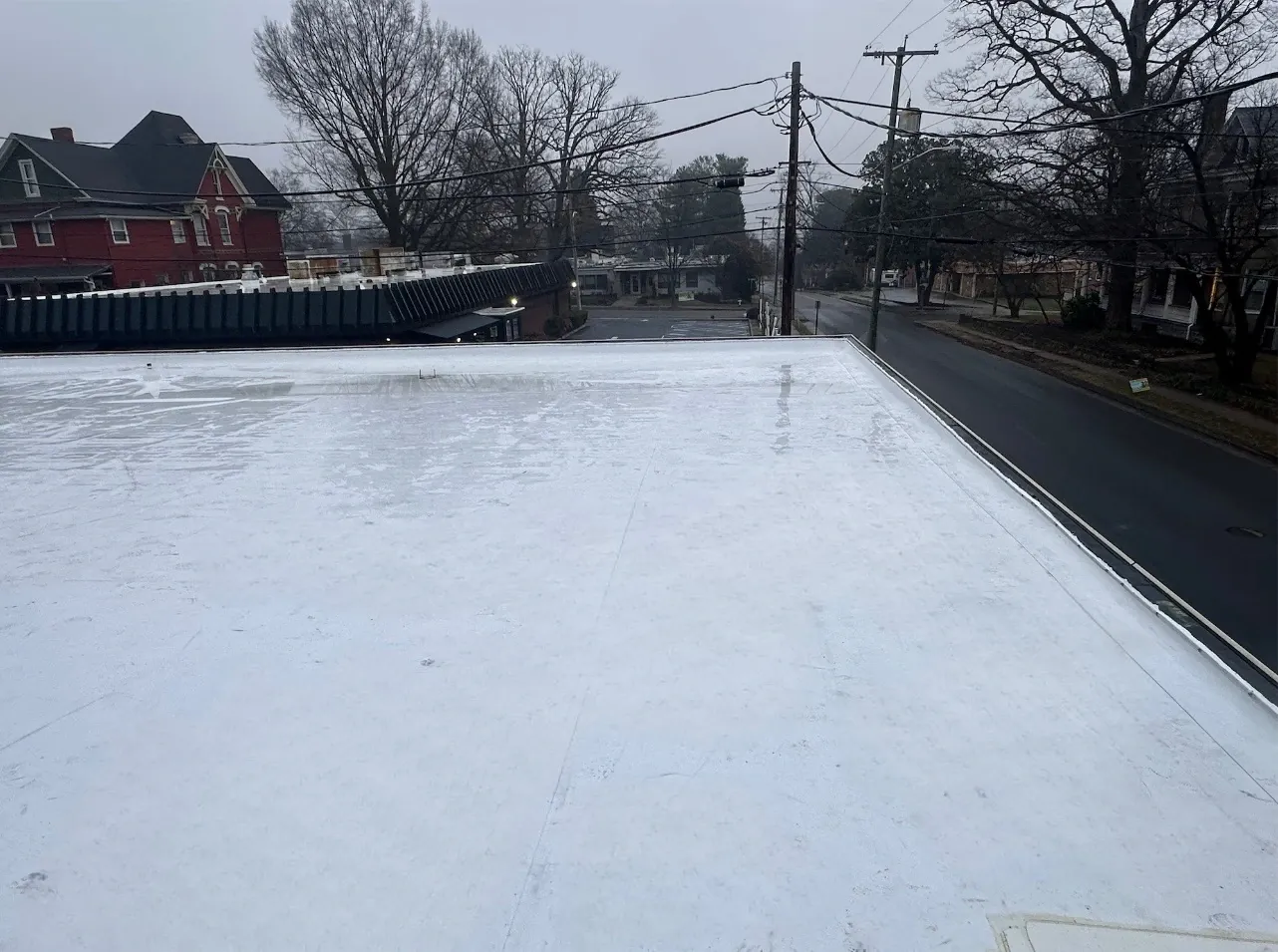
TPO has become the most common membrane on new commercial buildings across South Carolina. It’s a single-ply white material that reflects heat rather than absorbing it. For a state where cooling costs are a serious line item for most businesses, that matters. The U.S. Department of Energy notes that cool roofs can meaningfully reduce surface temperatures and air conditioning loads, and TPO qualifies on both counts.
On commercial flat roof repair jobs involving TPO, most problems trace back to the original installation: seams welded in cold or wet conditions, flashings not run high enough up parapet walls, or penetration boots that weren’t properly integrated. A qualified roofer can probe and re-weld weak seams and replace failed flashings without removing the system.
EPDM Roof Leaks and Repairs
EPDM is a rubber membrane found on a large share of older commercial buildings in South Carolina. It holds up well to UV and stays flexible through temperature swings, but its seams are glued or taped rather than heat-welded. EPDM roof leaks in SC most often trace back to seam adhesive that’s dried out or delaminated after years of thermal cycling.
Repairs involve cleaning the seam, applying fresh adhesive or seam tape, and adding a reinforcing cover strip over the lap. Standard commercial flat roof repair on EPDM can extend the system’s life by years if the membrane itself is still in reasonable shape. Black EPDM does absorb heat, so white EPDM or a reflective coating is worth considering on full replacements in Columbia and Greenville.
Coated Metal Roofing
Standing seam and corrugated metal roofs are common on warehouses and manufacturing facilities across the Lowcountry and Upstate. When the factory coating breaks down, seams open and water gets in quickly. The right commercial flat roof repair approach for aging metal is usually an elastomeric restoration coat applied before the original coating fails entirely. Learn more about metal roof installation options in SC.
Flat Roof Material Comparison for South Carolina Commercial Buildings
Material | Heat Reflectivity | Seam Type | Best For SC |
TPO | High (white membrane) | Heat-welded | New builds, replacements |
EPDM | Low (black) / High (white) | Taped / Glued | Repairs, older buildings |
Coated Metal | Medium to High | Standing seam / Fastened | Warehouses, restorations |

What a Commercial Roof Maintenance Plan Should Include
warranty document. For SC property managers overseeing multiple locations, it also creates a paper trail that matters for insurance claims and capital planning.
At minimum, a solid plan covers: two inspections per year, drain and scupper cleaning, seam and flashing documentation with photos, and a written repair log. If your roofer won’t provide written reports after each visit, they’re not running a real maintenance program. Explore commercial roofing services in Spartanburg SC and flat roof repair options in Spartanburg for more information on what a professional commercial flat roof repair and maintenance program looks like in practice.
Business Roof Replacement South Carolina: When to Stop Repairing
Not every roof makes sense to patch. If a membrane is past 20 years, if ponding water covers more than 25% of the surface after rain, or if insulation has been saturated by repeated leaks, business roof replacement South Carolina is usually the better investment.
The cost of ongoing commercial flat roof repair stacks up quietly. A roof that’s constantly patched is often losing energy through compromised insulation at the same time, driving up HVAC costs month after month. A full replacement with a properly specified TPO or EPDM system typically pays back through energy savings and reduced maintenance costs within a reasonable timeframe.
Frequently Asked Questions
How do I know if my building needs commercial flat roof repair or a full replacement?
If leaks are limited to seams or flashings, commercial flat roof repair in South Carolina can usually address the problem without a full tear-off. If the membrane is brittle, ponding is widespread, or insulation has been repeatedly saturated, replacement typically makes more financial sense than continuing to patch the same areas.
What is the best flat roofing material for South Carolina's climate?
TPO is the most commonly recommended option for new SC commercial installations because of its heat-reflective white surface and heat-welded seams. For TPO roof repair SC jobs, it's also one of the most maintainable systems. EPDM and coated metal are solid alternatives depending on building type and age.
How often should a commercial flat roof be inspected in South Carolina?
Twice a year is standard. Spring inspections catch winter damage before storm season, and fall inspections document anything hurricane season left behind. A documented commercial roof maintenance plan protects your warranty coverage and gives you records if an insurance claim comes up.
How do I spot a storm chaser versus a real local roofer?
Most EPDM roof leaks are repairable if found early. A trained roofer will clean the seam, apply adhesive or seam tape, and add a reinforcing strip. If the membrane has significantly shrunk or cracked across a large area, a section replacement or full re-roof is the better call.
Does insurance cover commercial flat roof repair in South Carolina?
Storm damage from wind or hail is typically covered under commercial property policies. Leaks caused by deferred maintenance usually are not. Keeping a documented commercial roof maintenance plan on file strengthens storm-related claims and demonstrates the property was properly maintained.
Get a Quote for Commercial Flat Roof Repair in South Carolina
Whether you manage a Lowcountry warehouse or an Upstate office complex, commercial flat roof repair in South Carolina requires a contractor who knows the local climate, has real experience with TPO and EPDM systems, and will back their work in writing.
Consumer First Roofing SC serves Charleston, Columbia, and Greenville with honest assessments and quality workmanship. Contact us today for a no-pressure inspection and quote.