Flat roofs on warehouses, offices, and commercial buildings in Spartanburg take constant abuse from South Carolina’s humid summers and unpredictable storms. When leaks start dripping onto inventory or ponding water threatens structural damage, property managers need fast, reliable commercial roofing Spartanburg contractors who understand the unique demands of business properties.
Unlike residential sloped roofs, commercial roofing Spartanburg systems require specialized knowledge of membrane materials, drainage design, and industrial-grade repairs. A small leak left unattended can shut down operations, damage expensive equipment, and lead to costly insurance claims. That’s why businesses across Spartanburg County and neighboring Union County rely on experienced commercial roofing Spartanburg professionals who can diagnose problems quickly and execute repairs that last.
Table of Contents
Why Spartanburg Businesses Need Flat Roof Expertise
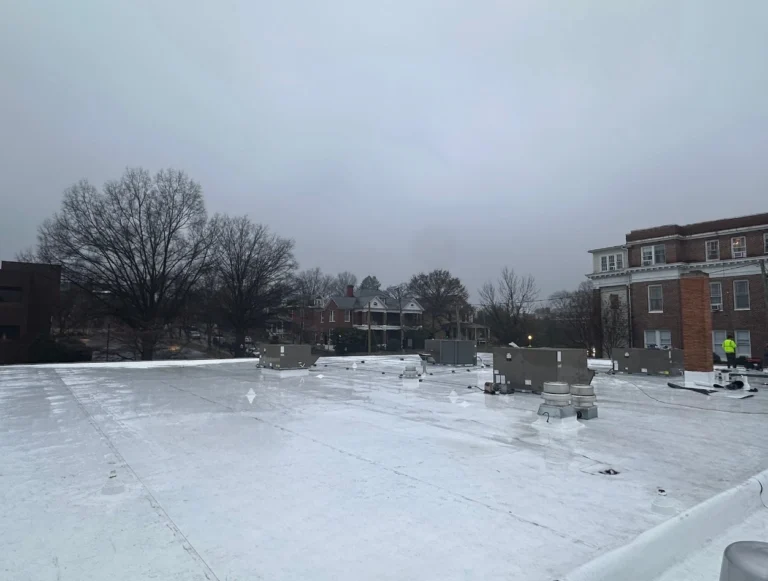
Commercial and industrial flat roofing systems will inevitably need repair work over their lifespan. The right maintenance plan and experienced roof repair contractor will help extend the life of your roof and protect your investment. Flat roofs face challenges that pitched residential roofs never encounter. Water doesn’t naturally run off the way it does on sloped surfaces, which means commercial roofing Spartanburg drainage systems must be perfectly engineered to prevent pooling.
In Spartanburg’s climate, where afternoon thunderstorms can dump inches of rain in minutes during summer months, any flaw in your roof’s drainage becomes a serious liability. We’ve seen warehouse floors flood because a single clogged drain overwhelmed the entire system. The humidity also accelerates deterioration of roofing membranes, especially on older modified bitumen or EPDM systems that weren’t designed for South Carolina’s weather patterns.
Business owners often discover roof problems during lease negotiations or building inspections, when what seemed like a minor stain suddenly becomes a deal-breaker. Having a relationship with a trusted roof repair team before emergencies strike saves time and money. Commercial roofing Spartanburg inspections help identify these issues early.

Common Flat Roof Issues in Spartanburg Businesses
From our years working on commercial roofing Spartanburg properties across the Upstate, these are the problems we encounter most often:
- Ponding water that sits longer than 48 hours after rainfall, slowly degrading membrane integrity
- Membrane splits and tears from thermal expansion during extreme temperature swings between winter and summer
- Flashing failures around HVAC units, exhaust vents, and rooftop equipment where sealant has dried out
- Blistering caused by trapped moisture beneath the roofing surface, common in older built-up roof systems
- Punctures from foot traffic during maintenance or installation of satellite equipment and cell antennas
- Storm damage from fallen tree limbs, hail impacts, or wind-driven debris during severe weather events
Each of these issues starts small but compounds rapidly. A dime-sized blister can turn into a square foot of delaminated roofing in a single season. That’s why regular commercial roofing Spartanburg inspections are not optional for commercial properties. Your flat roof repair SC plan should include at least twice-yearly checks, ideally in spring and fall before extreme weather hits.
Flat Roof Repair Process for SC Commercial Properties
When you call us about a commercial roofing Spartanburg problem, here’s what actually happens on the job site. First, we conduct a thorough inspection to identify not just the obvious leak but the underlying cause. Water travels along roof decking and can show up inside the building dozens of feet from the actual breach point. We use infrared scanning on larger commercial roofing Spartanburg buildings to detect moisture trapped in insulation layers that isn’t visible to the naked eye.
Once we’ve mapped the damage, we determine whether a repair or full replacement makes financial sense. For localized issues like a torn seam or damaged flashing, targeted repairs using compatible materials get you back in business fast. We cut out the compromised section, prepare the substrate properly, and install new membrane with heat-welded or adhesive seams that match or exceed the original installation specs.
Temporary patches are sometimes necessary to stop active leaks during bad weather, but commercial roofing Spartanburg teams always follow up with permanent solutions. We’ve repaired roofs where previous contractors just slapped tar over problems without addressing the root cause. That approach fails every time because it traps moisture and accelerates rot in the roof deck.
For extensive damage affecting more than 25% of the roof surface, replacement often costs less over a five-year window than repeated repair calls. This is especially true for older commercial roofing Spartanburg systems nearing the end of their warranty period.
TPO Roof Installation and Maintenance
The process of replacing a commercial or industrial flat roof depends on several factors specific to your building. The existing roofing material, the condition it’s in, and the age of the materials all play a part in deciding the best course of action for your property.
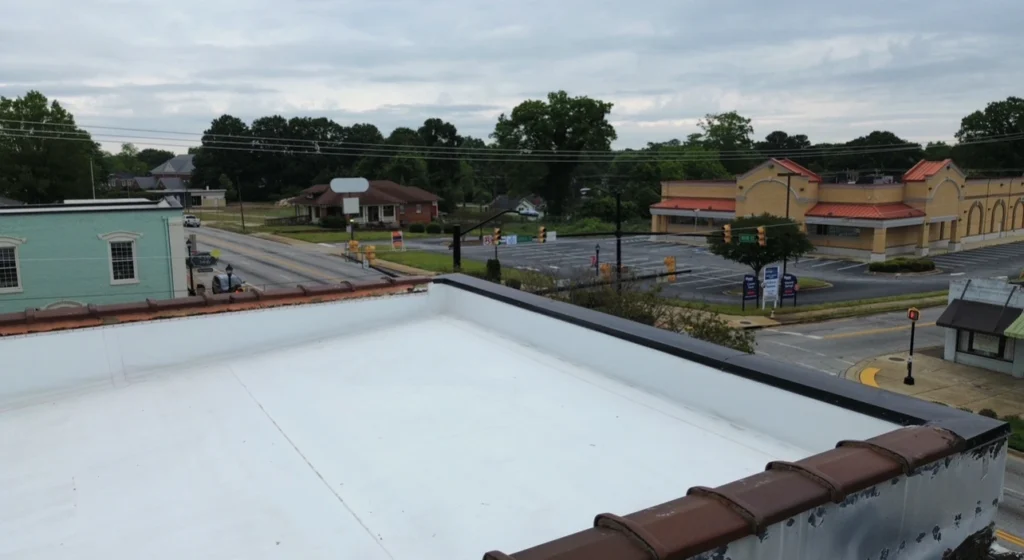
TPO (thermoplastic polyolefin) roofing has become the standard for new commercial TPO installations across South Carolina because it handles our climate better than older systems. The white reflective surface reduces cooling costs significantly in Spartanburg’s hot summers, sometimes cutting energy bills by 20-30% compared to dark EPDM roofs. Commercial roofing Spartanburg contractors heat-weld TPO membranes at the seams, creating watertight bonds stronger than the material itself.
We install TPO in thicknesses from 45 mil to 80 mil depending on the building’s use and foot traffic patterns. A warehouse with constant rooftop HVAC maintenance needs heavier material than an office building that rarely sees anyone on the roof. The National Roofing Contractors Association provides detailed TPO installation standards that guide proper application techniques, and commercial roofing Spartanburg professionals follow those specs on every job.
Maintenance for TPO systems is straightforward but critical. Quarterly inspections should check for loose fasteners, seam separation, and debris accumulation around drains. The bright white surface shows dirt and biological growth easily, which actually helps you spot potential problems before they cause leaks. Unlike traditional tar-based roofs, commercial roofing Spartanburg TPO systems don’t require periodic recoating, which reduces long-term maintenance costs.

When to Replace Your Business Roof
This table breaks down the real costs we see across Spartanburg County for typical commercial roofing Spartanburg projects:
| Service Type | Average Cost per Sq Ft | Typical Project Total | Expected Lifespan |
|---|---|---|---|
| Minor leak repair | $8-$15 | $500-$2,000 | 2-5 years (repair longevity) |
| Section replacement | $12-$18 | $3,000-$8,000 | 10-15 years |
| Full TPO roof installation | $6-$10 | $15,000-$45,000 | 20-30 years |
| Modified bitumen system | $5-$8 | $12,000-$35,000 | 15-20 years |
| EPDM rubber roofing | $4-$7 | $10,000-$30,000 | 15-25 years |
These numbers assume standard warehouse or retail building sizes between 2,500 and 7,500 square feet. Larger industrial facilities require scaled pricing, and buildings with complex rooflines or multiple penetrations cost more per square foot due to increased labor. Commercial roofing Spartanburg estimates always account for these variables.
Business roof replacement makes financial sense when repair costs exceed 40% of replacement value, when the existing roof has less than five years of useful life remaining, or when you’re refinancing and lenders require updated roofing. We’ve helped property managers secure better insurance rates after replacing aging commercial roofing Spartanburg systems that were flagged as high-risk by underwriters.
Workers performing commercial roofing Spartanburg installations must follow strict OSHA safety protocols that add to labor costs but protect your liability exposure. Any contractor who doesn’t mention fall protection equipment and proper tie-off procedures is cutting corners that could cost you in workers’ compensation claims.
Commercial Roof Maintenance Tips for SC Warehouses
Regular roof maintenance is essential to extending the life of your commercial roof and preventing costly repairs down the line. Comprehensive commercial roofing Spartanburg maintenance services, including inspections, minor repairs, and cleaning, ensure your roof remains in top condition year-round and protects your business operations from unexpected disruptions.
Here’s the maintenance schedule that works for most commercial roofing Spartanburg properties. In March or April, before summer storm season, inspect all flashings, check drain functionality, and clear winter debris. This catches problems before heavy rains test weak points. In October or November, after hurricane season ends, conduct a second inspection focused on storm damage assessment and preparing drainage systems for winter.
Between scheduled inspections, assign someone on your staff to walk the roof after major storms. They don’t need commercial roofing Spartanburg expertise, just eyes to spot obvious damage like displaced membrane, standing water in new areas, or debris blocking drains. Quick action prevents small issues from becoming insurance claims.
Document everything with photos and notes. This creates a maintenance history that helps with warranty claims and proves due diligence to insurance adjusters. We’ve seen claims denied because property owners couldn’t demonstrate regular maintenance, even when storm damage was clearly covered.
Keep trees trimmed back from roof edges. Overhanging branches drop leaves that clog drains and create organic matter that accelerates membrane deterioration. In Spartanburg’s wooded areas, this simple commercial roofing Spartanburg maintenance step can add years to roof life.

Serving Union County and Greenville
Consumer First Roofing provides commercial roofing Spartanburg solutions throughout the greater Spartanburg region, including Union County and Greenville. Our commercial roofer Union County team handles everything from small retail repairs to large industrial installations. We understand the specific building codes and permitting requirements across different municipalities, which speeds up commercial roofing Spartanburg project timelines and prevents compliance issues.
Greenville commercial roofing projects often involve historic buildings downtown that require special attention to preserve architectural details while upgrading roof performance. We’ve replaced flat roofs on century-old warehouses converted to office space, matching new materials to original appearances while meeting modern energy codes.
The FEMA flood maps for this region show increased storm risk, which affects commercial roofing Spartanburg design requirements. Buildings in flood-prone areas need enhanced drainage capacity and stronger attachment systems to meet updated building standards. We factor these requirements into every commercial roof maintenance plan.
Frequently Asked Questions
How much does commercial roofing Spartanburg cost for a typical warehouse?
Most warehouse roof replacements run $15,000 to $45,000 depending on size and material choice. Commercial roofing Spartanburg TPO installation averages $6-$10 per square foot including labor. Flat roof repair SC costs less for isolated damage, typically $500-$2,000 for minor leak fixes. Get three quotes to compare pricing and warranty coverage.
How long does TPO roof installation take on a commercial building?
A 5,000-square-foot warehouse roof usually takes three to five business days for complete TPO installation, weather permitting. Larger commercial roofing Spartanburg industrial facilities may require two weeks. We work during off-hours when needed to minimize business disruption. Rush services are available for emergency situations.
What's the best flat roofing material for South Carolina's climate?
TPO roofing performs exceptionally well in SC heat and humidity. The reflective white surface reduces cooling costs, and heat-welded seams prevent the moisture intrusion that plagues older systems. Commercial roofing Spartanburg contractors recommend modified bitumen for lower budgets but it requires more maintenance. Avoid asphalt-based systems in our climate.
How often should commercial roofs be inspected in Spartanburg?
Schedule professional commercial roofing Spartanburg maintenance inspections twice yearly, in spring and fall. After severe storms, conduct visual checks for obvious damage. Annual infrared scans detect hidden moisture problems before they cause structural issues. Proactive commercial roofing Spartanburg inspection prevents expensive emergency repairs.
an you repair a commercial flat roof in winter?
Yes, though installation windows are more limited. Most roofing adhesives and membranes require temperatures above 40°F for proper bonding. Commercial roofing Spartanburg teams use cold-weather materials when necessary and plan work during warmer days. Emergency leak repairs happen year-round regardless of temperature. Business roof replacement projects are best scheduled for spring or fall.
Conclusion
Protecting your Spartanburg business with a reliable commercial roofing Spartanburg system isn’t just about fixing leaks. It’s about partnering with contractors who understand flat roof repair SC challenges, maintain proper certifications, and deliver work that stands up to our climate for decades. Whether you need emergency repairs, TPO roof installation, or a comprehensive maintenance program, the investment in quality commercial roofing Spartanburg services pays for itself through reduced energy costs, prevented damage claims, and extended roof life.
Don’t wait for ceiling stains to become customer complaints or inventory damage. Contact our Spartanburg team today for a free commercial roofing Spartanburg inspection and customized maintenance plan that keeps your business protected.