Charleston homeowners filing a roof insurance claim in Charleston SC after hurricane or coastal wind damage need a clear roadmap that covers documentation, timelines, and adjuster coordination. From photographing shingle loss to securing emergency tarping, understanding the roof insurance claim process prevents delays and ensures full coverage. Consumer First Roofing helps local homeowners navigate roof insurance claims with detailed inspections, written estimates, and adjuster meeting support.
Coastal storms hit hard in the Lowcountry. When wind rips shingles off or drives rain through compromised flashing, knowing how to document damage and file your roof insurance claim makes the difference between a smooth settlement and months of frustration.
Table of Contents
Understanding Charleston's Storm Damage Insurance Landscape
Charleston sits in the direct path of Atlantic hurricanes and tropical systems tracked by NOAA live hurricane tracking data. Wind-driven rain, storm surge, and sustained gusts regularly damage roofs across Charleston County, Mount Pleasant, and James Island. South Carolina homeowners insurance typically covers sudden storm damage but excludes gradual wear or deferred maintenance.
Your policy likely separates wind and hail coverage from other perils. Some insurers cap wind damage payouts or require separate windstorm policies in coastal zones. Review your declarations page before a storm hits so you understand deductibles, coverage limits, and whether you carry actual cash value or replacement cost coverage.
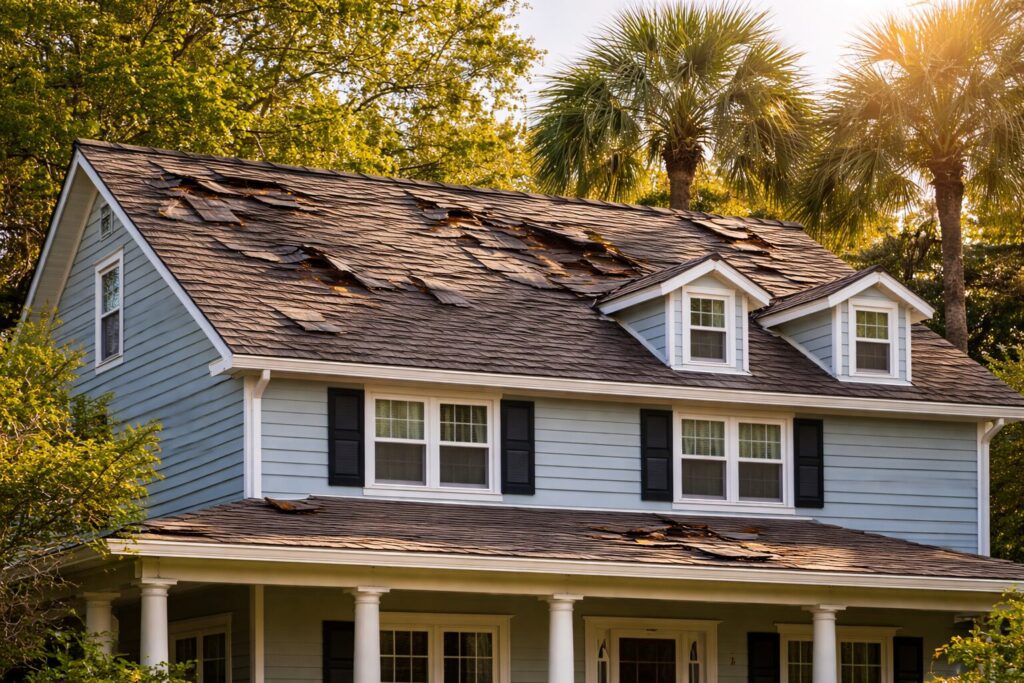
Coverage disputes often hinge on whether damage resulted from a single storm event or long-term neglect. Insurers send adjusters trained to identify pre-existing conditions like granule loss, cracked sealant, or rusted flashing. Having a recent roof inspection on file strengthens your position when filing a storm damage roof insurance claim.
Immediate Steps After Storm Damage
Safety comes first. If you spot leaks, place buckets under active drips and move valuables away from wet areas. Do not climb onto a damaged roof during high winds or rain. Once conditions stabilize, document everything before making temporary repairs.
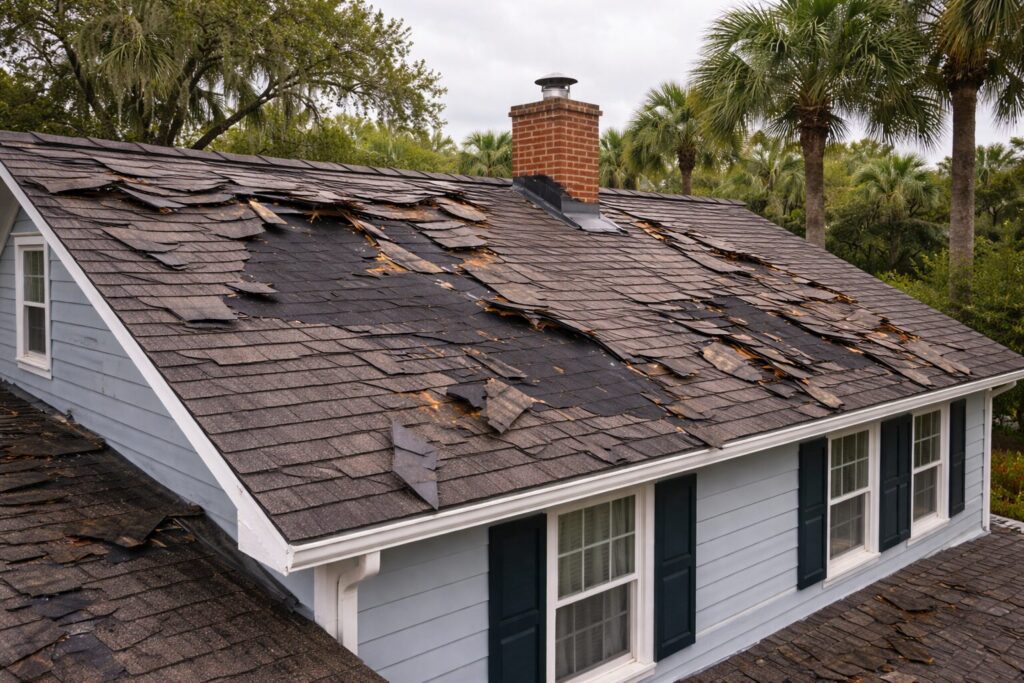
Take wide-angle photos showing the entire roof from ground level, then zoom in on specific damage like missing shingles, lifted ridge caps, or torn underlayment. Photograph interior damage including ceiling stains, wall discoloration, and soaked insulation. Date-stamp images if possible and take video walkthroughs narrating what you see.
Contact your insurance company within 24 to 48 hours of discovering damage. Most South Carolina policies require prompt notification, and delays can complicate your roof insurance claim. Ask for your claim number, adjuster assignment timeline, and any immediate documentation requirements.
If water is actively entering your home, arrange for professional emergency roof repair services like tarping or temporary patching. Insurers expect you to mitigate further damage, and reasonable emergency costs are usually reimbursable. Save all receipts and take photos of temporary repairs before and after installation.
Schedule a professional storm damage roof inspection with a licensed local contractor. A detailed inspection report documents the full scope of damage, including issues not visible from the ground like compromised decking, damaged flashing, or broken roof vents. This report becomes critical evidence during your roof insurance claim process.
| Action | Timing | Purpose |
|---|---|---|
| Document damage with photos and video | Immediately after storm passes | Creates visual evidence for roof insurance claim |
| Contact insurance company | Within 24-48 hours | Meets notification requirements |
| Arrange emergency tarping if needed | Same day as active leak | Prevents additional water damage |
| Get professional roof inspection | Within 3-5 days | Establishes full damage scope |
| Meet with insurance adjuster | Per insurer schedule | Official damage assessment |
How Insurance Adjusters Evaluate Storm Damage
Your adjuster will inspect the roof, attic, and interior damage. They look for wind uplift patterns, hail impact marks, and water intrusion paths. Adjusters also review weather data to confirm storm severity on the date you reported. The FEMA preliminary damage assessment process provides federal context for how widespread regional damage influences individual roof insurance claims.
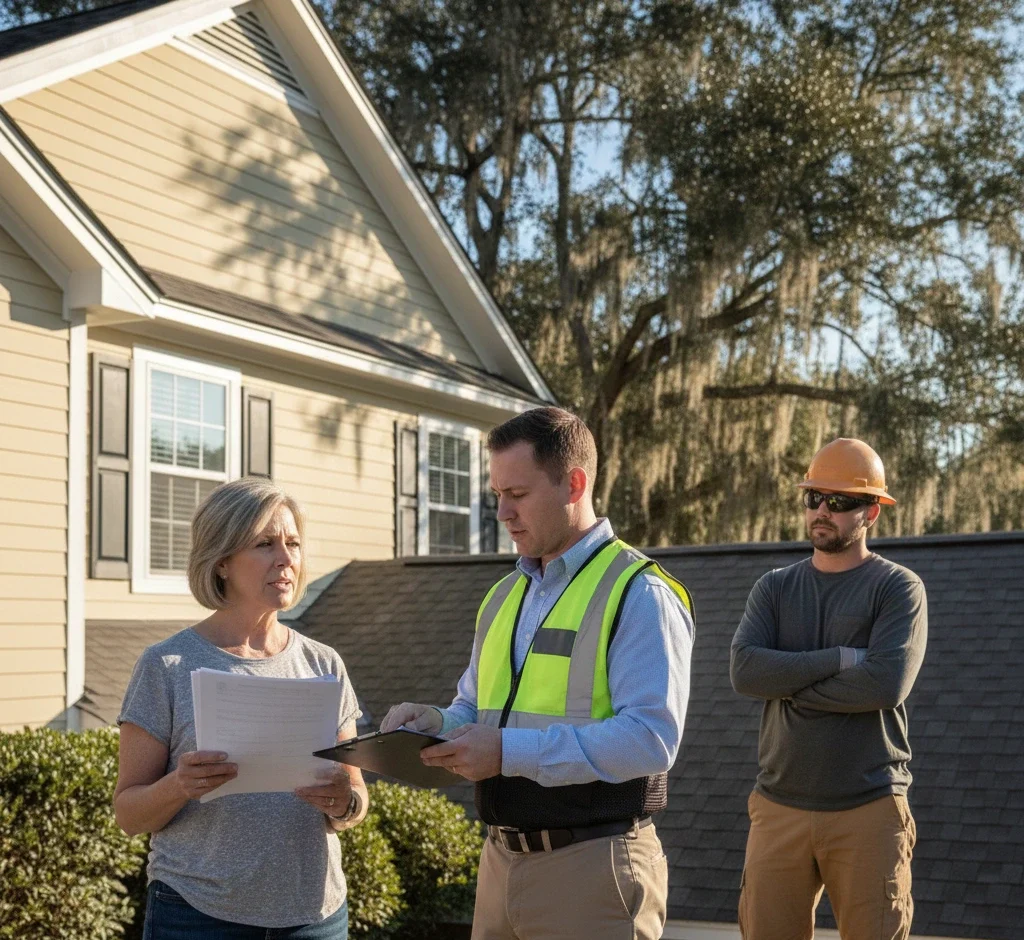
Be present during the adjuster’s inspection. Point out all damaged areas including gutters, soffit, fascia, and vents. If you hired a contractor for an inspection, have them attend the meeting to explain technical findings the adjuster might miss.
Adjusters often use software that generates repair estimates based on local material costs and labor rates. These estimates can undervalue complex repairs or miss hidden damage like saturated insulation or compromised roof decking. Request a detailed line-item breakdown of the adjuster’s assessment for your roof insurance claim.
Some adjusters initially offer actual cash value payments that deduct depreciation from replacement costs. You may receive a second check for depreciation after repairs are completed and you submit invoices. Clarify this process upfront to avoid confusion about settlement amounts.
Working With a Roofing Contractor During the Claims Process
Hiring a contractor experienced in roof insurance claims assistance gives you an advocate who speaks the adjuster’s language. Consumer First Roofing provides detailed damage reports, material specifications, and scope-of-work documents that align with insurance industry standards for roof insurance claims.
A contractor’s estimate should match or exceed the adjuster’s initial assessment. If discrepancies exist, your contractor can request a reinspection or supplement to cover missed damage. Insurers routinely approve supplements when legitimate additional damage is documented.
Avoid contractors who offer to waive deductibles or promise to “handle everything” without your involvement. These practices violate South Carolina insurance regulations and can jeopardize your roof insurance claim. Legitimate contractors explain the process, provide transparent pricing, and let you control communications with your insurer.
Get multiple estimates if you prefer, but choose a contractor licensed in South Carolina with verifiable storm damage experience. Check references, verify insurance, and confirm they pull proper permits for roof replacements.
If you’re facing any of these, call a local roofer immediately. A reputable contractor will send a crew to install temporary protection like tarps or emergency patches. This prevents additional water damage to ceilings, walls, and insulation while you wait for your insurance adjuster.
According to FEMA tips on protecting your home after severe storms, securing your home quickly after damage reduces long-term repair costs and health risks like mold. Temporary fixes don’t void your insurance claim as long as you document everything and don’t make permanent repairs before the adjuster arrives.
Consumer First Roofing provides fast storm damage roof repair services in South Carolina, including emergency tarp installation and temporary weatherproofing after hailstorms.
What to Do If Your Roof Insurance Claim Is Denied
Roof insurance claim denials often cite exclusions like gradual deterioration, cosmetic damage, or insufficient storm evidence. Request a written denial explanation detailing specific policy language and reasoning. Review this carefully against your policy’s actual terms.
South Carolina law requires insurers to provide clear denial justifications. The South Carolina insurance regulations overview outlines consumer protections and dispute procedures. You have the right to challenge roof insurance claim denials through internal appeals or, if necessary, the South Carolina Department of Insurance.
Consider hiring a public adjuster who works for you, not the insurance company. Public adjusters charge a percentage of your settlement but often recover significantly more than initial offers, especially for denied roof insurance claims in Charleston SC.
Document everything. Keep copies of all correspondence, inspection reports, photos, and repair estimates. This paper trail proves invaluable if your roof insurance claim disputes escalate to mediation or legal proceedings.
Filing Timeline and Key Deadlines
Most South Carolina policies require reporting damage within one year of the loss date, though best practice is immediate notification. Insurers typically assign adjusters within five to ten business days during normal periods, but major hurricanes can delay assignments for weeks.
After the adjuster’s inspection, expect a settlement offer within 15 to 30 days. Review it carefully before accepting. Once you sign a release, reopening the roof insurance claim for additional damage becomes extremely difficult.
Complete repairs within the timeframe specified in your settlement. Some policies require finishing work within six months to a year. Missing these deadlines can void coverage for future depreciation payments.
Essential Documentation Checklist
Successful roof insurance claims include:
- Date-stamped photos and videos of all damage
- Contractor inspection reports with technical findings
- Weather reports showing storm date and intensity
- Repair estimates from licensed contractors
- Receipts for emergency repairs and tarping
- Correspondence with insurance company
- Policy declarations page showing coverage limits
Keep both digital and physical copies. Email important documents to yourself for cloud backup. Organization prevents frustration when adjusters request specific information weeks after your initial roof insurance claim filing.
Common Pitfalls to Avoid
Do not delay reporting damage hoping it will improve on its own. Small leaks worsen quickly, and late reporting gives insurers reason to question whether damage occurred during the covered event.
Avoid signing broad releases without understanding what you are agreeing to. Some documents waive your right to future roof insurance claims related to the same storm event.
Never start permanent repairs before the adjuster inspects unless actively preventing additional damage. Removing evidence of the original damage can invalidate your roof insurance claim.
Be wary of storm chasers who canvass neighborhoods after major weather events. Out-of-state contractors often lack proper South Carolina licensing and disappear before completing repairs.
Frequently Asked Questions
How long do I have to file a roof insurance claim in Charleston SC after a hurricane?
Most South Carolina homeowners policies require reporting within one year of the damage date, but you should notify your insurer within 24 to 48 hours. Prompt reporting prevents disputes about when damage occurred and ensures faster adjuster assignment for your roof insurance claim during busy storm seasons.
What if my roof insurance claim is denied due to wear and tear?
Request a detailed written denial explaining which policy exclusions apply. You can challenge roof insurance claim denials through your insurer's internal appeal process or file a complaint with the South Carolina Department of Insurance. Hiring a public adjuster or attorney may help if you believe the denial is unjustified.
Does homeowners insurance cover wind-driven rain damage in a roof insurance claim?
Coverage depends on your specific policy language. Most policies cover water damage if wind first damages the roof structure, allowing rain to enter. However, rain entering through pre-existing gaps or deteriorated materials may be excluded. Document the sequence of damage carefully for your roof insurance claim.
Do I need emergency repairs before filing my roof insurance claim?
You should make reasonable temporary repairs like tarping to prevent further water damage. Document the original damage with photos before any repairs, save all receipts, and notify your insurer immediately. Emergency mitigation is expected and usually reimbursable under your roof insurance claim coverage terms.
Can I request a second inspection if I disagree with my roof insurance claim assessment?
Yes. You can request a reinspection or provide a contractor's estimate showing additional damage the adjuster missed. Insurers routinely approve supplemental payments when legitimate new damage is documented. Requesting a reinspection does not jeopardize your original roof insurance claim.
Conclusion
Filing a roof insurance claim in Charleston SC requires thorough documentation, understanding your policy’s coverage limits, and coordinating with experienced professionals who can support your case. From the first photos after a storm to the final settlement check, staying organized and proactive protects your home and your financial investment. Consumer First Roofing provides Charleston homeowners with expert inspections, detailed damage reports, and roof insurance claim support that helps secure fair settlements. Contact us for a comprehensive roof assessment and claims assistance that puts your interests first.